Introduction: Why Plan Your Move to Cyprus Now?
If you’re seriously considering a life change, 2026 is the year to move to Cyprus. More expats, retirees, and investors are moving to Cyprus in 2026 than at any point in the past decade, drawn by warm Mediterranean weather, personal safety, and a lifestyle that prioritises well-being over hustle.
This isn’t a tourism brochure. This is a practical Cyprus relocation guide focused on what actually matters when you’re uprooting your life: residency pathways, property investment, taxes, and everyday costs.
Here’s a quick snapshot of what Cyprus offers right now:
Over 300 sunny days per year
The cost of living in Cyprus is 8% lower than the EU average
GDP growth forecast of approximately 3.5% for 2026
Strong and growing expat life in Cyprus across multiple coastal cities
At CyprusMove.com, we specialise in helping eu citizens and non eu citizens navigate Cyprus residency, Cyprus permanent residency, and buying property on this mediterranean island. Each of the ten reasons below is backed by concrete data, real city-level examples, and current 2026 policy timelines.
Reason 1 – Exceptional Quality of Life
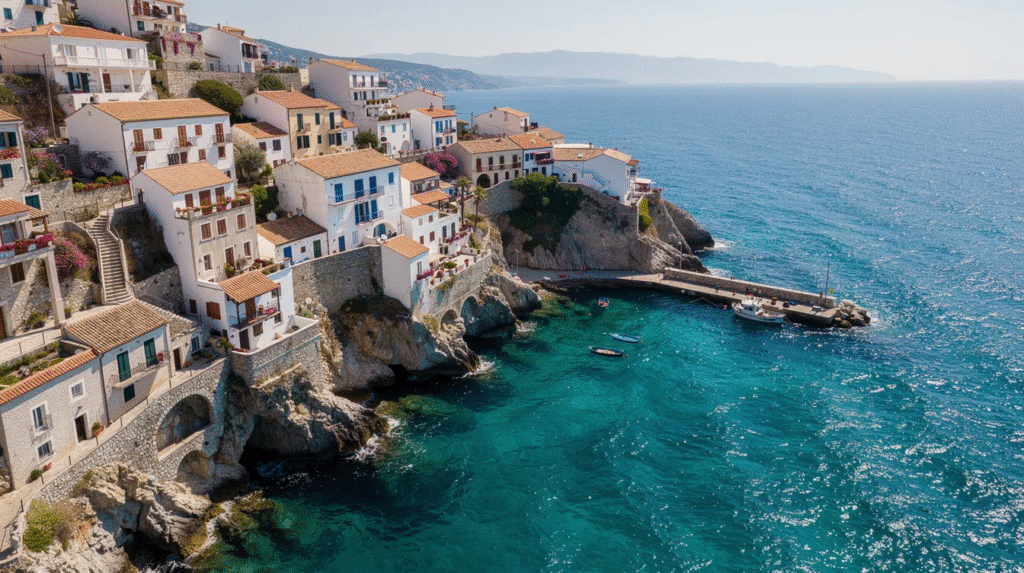
Living in Cyprus means trading rush-hour stress for evening promenades along Limassol’s seafront, weekend hikes in the Troodos mountains, and coffee at a Paphos harbour café where nobody checks the clock.
Cyprus ranks as one of the safest european countries. The homicide rate is only 0.8 per 100,000 people, well below the EU average. Over 80% of residents feel safe walking alone at night. Cyprus has one of the lowest crime rates in Europe, and it ranks 5th among EU countries for lowest violent crime. Cyprus ranks high among expat destinations due to its beautiful beaches and safe environments.
Healthcare access is strong. The public system, GESY, covers residents with GP visits at a €1 copay and specialist appointments around €6. Private healthcare offers high-quality services with short waiting times for those who prefer it. Modern broadband and reliable mobile networks make the island practical for remote workers, and commute times in smaller cities stay well under what you’d face in London or Manchester.
The relaxed mediterranean pace extends into daily routines – family dinners that stretch past 10pm, spontaneous beach trips after school, and a community-oriented culture that genuinely welcomes newcomers. For retirees especially, this quality of life is hard to replicate anywhere in Northern Europe. You can explore more in our Retirement Cyprus guide.
Reason 2 – 300+ Days of Sunshine and Ideal Cyprus Weather
Cyprus has over 300 sunny days per year, accumulating over 3,300 hours of sunshine on the coast – compared to roughly 1,400 hours in the UK. Cyprus has a mild winter climate, with coastal daytime temperatures averaging 17–20°C from December through February, while summers reach 30–35°C along the coast.
Sea temperatures are suitable for swimming from May through October, rising from around 20–22°C in late spring to 27–28°C at peak summer. Rainfall is largely confined to winter months, with annual precipitation around 350–400mm.
This consistent weather enables year-round outdoor activities: hiking in Troodos, cycling along coastal paths, and water sports in Paphos and Protaras. It’s a core reason many people retire in Cyprus or relocate with children seeking more outdoor time than the UK can offer.
One practical note: extreme summer heat, especially inland in Nicosia where peaks hit 38–40°C, means siesta hours and later evening routines become standard. When choosing housing, prioritise good insulation and air-conditioning – your electricity bill will thank you.
Reason 3 – Affordable Cost of Living in Cyprus
The affordable cost of living is one of the most tangible advantages of relocation. Overall living expenses in Cyprus run roughly 15–20% below the UK, and the island sits 8% under the EU average on most indices.
Here’s what typical monthly costs look like in 2026:
Category | Approximate Cost |
|---|---|
1-bed apartment rent (city centre) | From €550 |
1-bed apartment rent (Limassol centre) | €700–€1,000 |
Groceries (couple, monthly) | €250–€400 |
Meal in a café | €10–€20 |
Mid-range restaurant (two people) | €50–€65 |
Petrol per litre | €1.30–€1.50 |
Internet (100+ Mbps) | €30–€50 |
Electricity & utilities (apartment) | €80–€180 |
A one-bedroom apartment rental starts from €550 in cities like Larnaca, Paphos, and Nicosia. Limassol commands higher rents due to its status as the commercial centre. Utilities and groceries are about 15% cheaper in Larnaca than in larger cities like Limassol.
The average monthly net salary in Cyprus is €1,900, which matters if you’re planning to work locally. Youth unemployment in Cyprus remains high at 13%, and Cyprus has very few job opportunities for expats outside specialized sectors – so most relocators either work remotely, run a business, or live on pensions and investment income. The unemployment rate in Cyprus dropped to 3.7% in 2025 overall.
For families, international school fees are a significant budget item, typically ranging €400–€1,200 per month per child. There is no annual property tax in Cyprus, which offsets some costs.
For a detailed cost breakdown tailored to your lifestyle and city of choice, CyprusMove.com can provide up-to-date comparisons.
Reason 4 – Strong Property Market Growth and Cyprus Real Estate Potential
Cyprus real estate has been on a consistent upward trajectory. In 2024, apartment prices rose by 8.8% in Cyprus. Nationally, residential property prices continued climbing by approximately 7% year-on-year through late 2025, with Paphos seeing growth above 11% and Limassol around 10%.
The average sale price per square metre is €2,600 across the island, though this varies sharply by location:
City | Typical Price per m² |
|---|---|
Limassol (prime coastal) | €4,500–€8,000+ |
Limassol (suburbs/resale) | €2,200–€4,200 |
Paphos | €1,800–€3,500 |
Larnaca | €1,700–€3,500 |
Nicosia | €1,500–€3,000 |
Demand is driven by new build property in Cyprus around Limassol’s marina district, the Larnaca waterfront development area, and Paphos coastal suburbs. Both lifestyle buyers and pure investors are active, attracted by strong rental demand from expats and tourists and limited new coastal land.
The average gross rental yield in Cyprus reached 4.77% in 2025, making Cyprus investment property competitive against many other european countries. For a deeper look at yield data and market timing, see our guide on investing in Cyprus property in 2026.
Non eu nationals and foreign buyers purchasing cypriot property may need Council of Ministers approval for certain transactions, but can still own freehold homes. Eu citizens face fewer restrictions.

Reason 5 – Attractive Property Prices vs Western Europe
Consider what €350,000–€400,000 buys you. In Cyprus, that’s a three-bedroom villa with a private pool near the Paphos coast, or a luxury two-bedroom apartment in Limassol’s Germasogeia district. The same income spent in London barely covers a studio flat in Zone 3.
Buying property in Cyprus can be both a lifestyle upgrade and a strategic investment – especially for those relocating from the UK in 2026. Many expats initially rent before deciding to buy property in Cyprus, using the first few months to explore neighbourhoods.
Property prices at the affordable end include smaller apartments in Larnaca and Nicosia from around €120,000–€180,000, village houses inland, and new build projects that sometimes offer staged payment plans.
Purchase costs to budget for:
Stamp duty: 0.2%
VAT on new builds: 19% standard, but property owners can reduce VAT from 19% to 5% on qualifying primary residences
Transfer fees: sliding scale, often reduced for new properties
Annual property tax: none – Cyprus has no annual state property tax
Mortgage availability for foreign buyers exists but typically requires 30–40% deposit and proof of income. Non-resident borrowers may face stricter criteria than those legally resident on the island.
CyprusMove.com helps foreign nationals shortlist areas, negotiate with developers, and connect with an English-speaking real estate agent to secure clean title deeds. For a full walkthrough, visit our property buying guide for overseas buyers.
Reason 6 – Residency & Immigration Benefits, Including the Cyprus Golden Visa
Cyprus offers several residency pathways in 2026, and the right one depends on your nationality, finances, and goals. Some non-EU nationals may need an entry visa before travelling to Cyprus for a longer stay, and this is separate from the residence permit process. Here’s a clear breakdown.
For eu citizens: Registration is straightforward. You apply for an MEU residence document (commonly called the “yellow slip”) if staying beyond three months. Eu citizens enjoy the same residence rights as Cypriot nationals in most practical respects, as do nationals of the european free trade association.
For non eu citizens, the main routes include:
Cyprus golden visa (Category 6(2)): Investors can obtain permanent residency by investing €300,000 in new residential or commercial property, plus demonstrating a secured annual income of at least €30,000 from abroad. Obtaining a residence permit takes about 4-6 weeks for initial processing, with full approval in roughly 2–4 months. This permanent residence permit has minimal physical stay requirements.
Temporary residence permit: For retirees or those with independent annual income from abroad. Temporary residence permits are valid for 12 months and renewable. You must prove sufficient income to obtain a residency permit in Cyprus.
Work permit / work visa: A work permit application takes 6 to 8 weeks to process. In 2023, approximately 17,150 work permits were issued. About 50% of residence permits were for employment purposes.
Student visa: Available for those enrolled at a european university or accredited institution.
Digital Nomad Visa: Cyprus offers a Digital Nomad Visa for remote workers earning at least €3,500 per month. Learn more in our Digital Nomad Lifestyle guide.
The exact visa requirement depends on your nationality and reason for stay, and it is usually the first legal step before applying locally for residence.
Family reunification rules allow non eu family members – including a spouse and dependent children – to be included in a golden visa application. Family members can apply for residency after 5 years of stay for broader rights. You need a residence permit to stay over 90 days as a non-EU national. Permanent residency requires living in Cyprus for 5 years under the standard naturalisation route, though the investment pathway grants permanent residence immediately.
Healthcare insurance is required for residency in Cyprus, whether through GESY contributions or private health insurance.
Cyprus citizenship through naturalisation generally requires around seven years of legal residence plus Greek language proficiency. Residency is the first step – british citizenship holders do not receive special fast-track treatment post-Brexit.
For a full overview of pathways, see our Cyprus Residency Options page. CyprusMove.com does not replace the migration department or official authorities but guides clients through document preparation, bank account setup, and local appointments.
Reason 7 – Tax Advantages and Business-Friendly Environment
Cyprus tax benefits are a major draw for entrepreneurs, retirees, and remote workers. Cyprus has a corporate tax rate of 12.5%, among the lowest in any eu country. There is no inheritance tax and no wealth tax.
The non-dom regime for new residents is particularly attractive:
Dividend and interest income: Exempt for a set period (currently up to 17 years)
GESY contribution: Around 2.65% of income, capped annually
Personal income tax: Individuals earning under €19,500 pay no income tax. Progressive rates apply above that threshold.
Foreign pension income: Can be taxed at a flat 5% on amounts above approximately €3,420 per month
Cyprus has a double taxation agreement with the UK, which prevents paying tax twice on the same income. This matters significantly for uk residents and uk nationals receiving a uk state pension or investment income from the UK. The uk government’s treaty with Cyprus remains in force post-Brexit.
Setting up a cyprus company is practical for business owners wanting an EU jurisdiction with English-speaking legal, accounting, and banking professionals. International companies and foreign companies looking for EU market access find Cyprus competitive. Registration requires substance – a real office and staffing – but CyprusMove.com can introduce reliable legal and tax partners. Explore our Taxation Benefits page for detailed comparisons.
Reason 8 – Safe, Family-Friendly Island for Long-Term Living
Safety and community are consistently the top reasons families move to Cyprus, especially from the UK and Northern Europe. Cyprus ranks 13th in the world for safety, and it is widely regarded as a safe country for raising children.
The numbers back this up: the homicide rate in Cyprus is only 0.8 per 100,000 people, and violent crime is exceptionally rare compared to many EU capitals. Neighbourhoods in Paphos, Larnaca, and Limassol feel genuinely secure at all hours.
Education options include:
Local Greek-language public schools (free)
English-speaking international schools in Nicosia, Limassol, Larnaca, and Paphos – fees typically €400–€1,200 per month per child
Several schools offer IB, British, or American curricula
Healthcare for families: Residents can access public healthcare regardless of nationality through GESY. Cyprus’s healthcare system ranked 29th globally in 2024 – the Global Health Index ranked Cyprus’s healthcare system higher than the USA. Public healthcare in Cyprus is funded through taxes and contributions. Many expats also maintain private health insurance or private healthcare for shorter waiting times and specialist access.
Daily family life revolves around playgrounds, seafront promenades, weekend trips to the Troodos mountains, and a social culture that genuinely centres on children. The transportation infrastructure in Cyprus is limited, and owning a car is often necessary, especially outside city centre areas. Summer heat means adjusting outdoor playtimes to mornings and evenings for younger children.

Reason 9 – Established Expat Communities and Smooth Integration
Expat life in Cyprus is well established. Paphos hosts a strong expat community of british expats and british citizens, while Limassol attracts a more international mix including Russian-speaking and other European communities. Larnaca and Nicosia each have growing expat populations with distinct characters.
English is widely spoken in Cyprus, particularly in expat-heavy areas. You’ll find English-speaking lawyers, doctors, schools, and accountants without difficulty. This makes integration significantly smoother than in many other european countries.
Community resources for newcomers include:
British & Commonwealth social clubs
International women’s networking groups
Tech and business meetups in Limassol and Nicosia
Family playgroups and parent forums
Active Facebook groups and online forums
Cultural integration goes deeper when you learn basic Greek phrases, attend local festivals – the Limassol Carnival, village wine festivals, and religious holidays are excellent entry points – and make an effort with Cypriot neighbours. Uk expats consistently report that the social transition is easier here than almost anywhere else in Southern Europe.
CyprusMove.com uses its on-the-ground network to connect clients with trusted service providers and existing expat communities, acting as a practical Cyprus relocation guide rather than just a paperwork processor.
Reason 10 – Strategic Location and EU Advantages
Cyprus is strategically located between Europe, Asia, and Africa, with two international airports at Larnaca and Paphos offering regular connections across all three continents.
Key flight times from Cyprus:
London: ~4.5–5 hours
Athens: ~1.5 hours
Tel Aviv: ~1 hour
Dubai: ~3.5 hours
Cairo: ~1.5 hours
As an EU member state, Cyprus offers EU living advantages including access to EU markets, legal protections for property and contracts, and easier movement for eu citizens. Cyprus is not part of the Schengen Area for visa-free travel as of 2026, so non eu citizens with Cyprus residency still need to observe Schengen visa rules when entering other eu countries – but this does not impact long-term living in Cyprus itself.
Relocating to Cyprus from the UK is a strategic choice for those wanting an EU base for business and tax optimisation while staying well connected by air. Uk citizens can stay in Cyprus for up to 90 days without a visa, and those wanting to enter Cyprus for longer must apply for the appropriate residence status.
Practical Steps to Move to Cyprus in 2026
Whether you’re an EU national or a third-country citizen, here’s a concise step-by-step checklist for planning your relocation.
Before you arrive:
Choose the right cypriot visa or residence category based on your profile – work, retirement income, cyprus golden visa, family reunification, or student visa
Gather key documents: valid passport, proof of annual income, clean criminal record, medical insurance
Plan a research trip to shortlist cities and view properties
You typically need to open a Cypriot bank account to manage living expenses in Cyprus – start the process early as it requires documentation
If you remain registered to vote in the UK, check the current rules on overseas voting and uk elections before relocating.
After arrival:
EU citizens must register with the Civil Registry and Migration Department if staying longer than three months – apply for your residence document (yellow slip)
Non eu nationals: apply for your temporary residence permit or permanent residence permit through the migration department
Register with GESY for public healthcare
Arrange car insurance and driving licence transfer if needed
Enrol children in school
Living in Cyprus can involve significant local bureaucracy and strict property laws, so professional guidance saves time. Uk nationals should be aware that post-Brexit rules apply, meaning they follow the non eu citizens pathway for long-term residence status. Official pre-move guidance may also come from the uk government for British citizens, while Cyprus immigration procedures are handled locally.
For those moving to Cyprus in 2026, CyprusMove.com can coordinate property viewings, introductions to lawyers, and timelines that align residency applications with property completion dates.
Best Places to Live in Cyprus in 2026
The best place depends on whether you’re a family, retiree, remote worker, or investor. Here’s a quick city-by-city profile.
Limassol – The dynamic coastal business hub. Highest property prices on the island, with prime apartments at €4,500–€8,000+/m². Strong international expat presence, excellent dining and nightlife, and the island’s commercial centre. Best for professionals, entrepreneurs, and those wanting urban energy by the sea.
Nicosia – The capital city, located inland. More affordable housing (€1,500–€3,000/m²), home to major universities, embassies, and government services. A genuine year-round local atmosphere rather than a tourist-focused one. Best for those who prefer city life without the coastal premium.
Paphos – Ideal for retirees and families seeking sea views, a relaxed pace, and a strong British expat infrastructure, with direct international airport access. Property prices run €1,800–€3,500/m². If you’re weighing options, our Paphos vs Larnaca comparison is worth reading.
Larnaca – Relatively affordable new build property near the main international airport. A growing digital nomad and remote worker scene. Rental fees for one-bedroom apartments start from €550, and it offers a strong balance between cost and coastal lifestyle. A rural country feel persists in surrounding villages.
Northern cyprus is a separate consideration entirely – it operates under different legal and political frameworks, and property purchases there carry distinct risks that fall outside the scope of this guide.

Conclusion: Is 2026 the Right Time to Move to Cyprus?
If you’re weighing whether to move to Cyprus in 2026, the fundamentals are strongly in your favour. A stable economy growing at 3.5%, a property market that continues to reward early movers with solid yields, and evolving residency programs make this a compelling window.
The core advantages – quality of life, affordable cost of living in Cyprus, property value for money, Cyprus tax benefits, and accessible Cyprus residency routes – all point in one direction. Cyprus is not just a holiday island. It’s a serious long-term base for families, retirees, and investors who want EU advantages without the price tag of Western European capitals.
Whether you attract expats through sunshine or substance, this island delivers both.
Ready to take the next step? View available properties in Cyprus, request the latest investment opportunities, or speak to a Cyprus relocation specialist at CyprusMove.com. Our team provides tailored guidance covering everything from choosing a city and buying property to optimising residency, your tax position, and eventually exploring Cyprus citizenship options.