Introduction: Is Investment Property in Cyprus Worth Considering in 2026?
Whether investment property in Cyprus can deliver attractive returns depends on several variables: location, property type, purchase price, rental strategy, and what you actually want from the investment. There is no single answer that applies to every buyer.
What is clear is that Cyprus remains firmly on the radar of international investors. The island’s tourism sector continues to grow, relocation demand from professionals and retirees is strong, and the legal framework for property ownership is relatively transparent compared to many neighbouring jurisdictions. Around 40% of recorded property sales in Cyprus involve foreign buyers, and that figure has been climbing.
This guide focuses on practical, data-driven help for buyers considering a property purchase in Cyprus – not generic lifestyle promotion. We cover locations, property types, rental strategies, costs, yields, risks, and the step-by-step buying process.
CyprusMove.com is a specialist helping international investors buy real estate in Cyprus for both rental income and long-term holding. Where relevant, we explain how our team supports the process. That said, laws, tax rules, and residency schemes can change, and readers must always confirm current details with Cyprus-qualified professionals before committing capital.
Is Cyprus a Good Place to Invest in Property?
The Cyprus real estate market has moved well beyond its post-2009 downturn. Transaction volumes have risen steadily, with total property sales reaching approximately €6.5 billion across roughly 25,600 transactions in 2025 – an 8% increase in value year-on-year. Residential property prices rose by about 7% year-on-year, driven by foreign demand and high construction costs.
Four main demand drivers underpin the market:
Tourism and holiday rentals – high annual tourist inflows drive a robust market for short term rentals, particularly in Paphos, Limassol, and the Ayia Napa/Protaras coast.
Long term rentals – professionals, students, and relocating workers create steady demand in Nicosia, Limassol, and Larnaca. Nicosia is less dependent on tourism and has a stable domestic tenant base.
Lifestyle and retirement relocations – Paphos and coastal suburbs attract retirees and lifestyle buyers from the UK, Northern Europe, and beyond.
Corporate presence – shipping, technology, and financial services firms headquartered in Limassol and Nicosia generate demand for residential property from their employees.
Cyprus is strategically positioned at the crossroads of Europe, the Middle East, and Africa. Its membership of the European Union provides legal and regulatory certainty while also giving businesses and investors access to European markets. English is widely spoken and its legal system is largely based on British common law, which simplifies the buying process for many international investors.
Broad market differences between cities matter. Limassol commands the highest prices and yields but requires more capital. Nicosia offers more stable, year-round demand at lower entry prices. Paphos is tourism-led with strong holiday-rental potential. Larnaca is benefiting from infrastructure improvements including its marina and port projects.
Cyprus offers the potential for both rental income and long-term capital appreciation – but no guaranteed returns or fixed future growth can be promised. For a deeper look at current market conditions, see this Property Investment in Cyprus (2026 Guide for International Buyers).
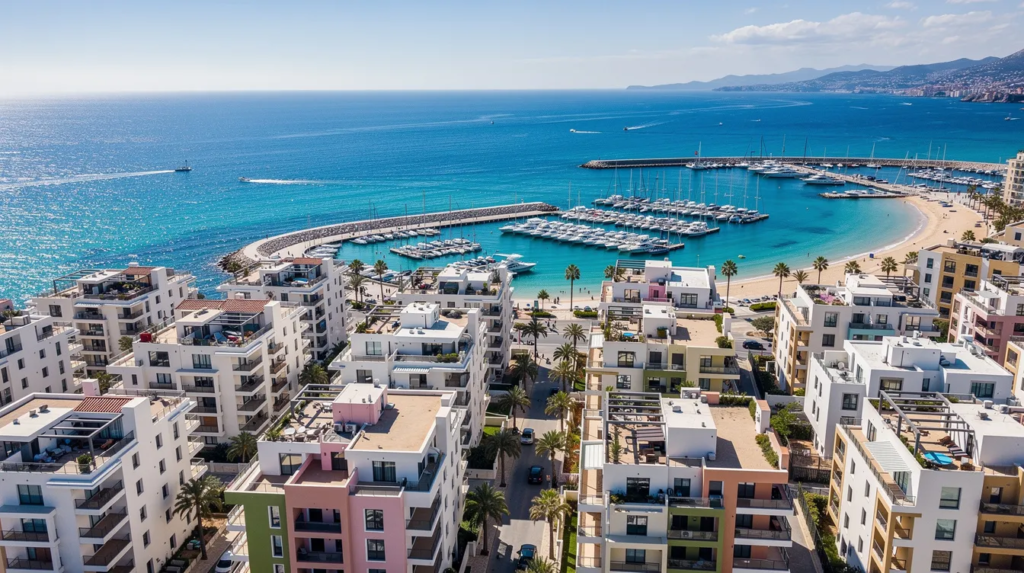
Why Invest in Cyprus Property? Key Potential Benefits and Risks
Cyprus property investment can be attractive when strategy matches investor profile. Here are the main potential benefits:
Rental income – both short-term holiday rentals in coastal and resort areas and long-term residential lets in cities. Investing in Cyprus property can potentially provide rental yields ranging from 4% to 6%, depending on location and property type.
Diversification – property in a eurozone EU member state can diversify assets away from a single home market.
Lifestyle combination – coastal properties can be used personally for part of the year while generating income during peak tourist months (April–October).
Capital growth – strong demand for modern, energy-efficient investment units has pushed prices up across most districts, though this should be treated as a medium- to long-term consideration.
Tax benefits worth noting in high-level terms:
There is no inheritance tax in Cyprus.
Immovable Property Tax was abolished in 2017.
Cyprus has a low 12.5% corporate tax rate.
Cyprus offers over 65 double taxation treaties.
Recent reforms raised the income tax-free band to €22,000.
Always obtain current tax advice – these rules can change.
Residency considerations: Investing €300,000 in property grants permanent residency in Cyprus. Permanent residency allows family members to join the applicant. Applicants must have a clean criminal record for residency approval. Residency application processing takes approximately 2 months. Investors can apply for Cyprus citizenship after eight years of residency. These criteria can be revised, so check the current requirements before relying on them.
Key risks to consider:
Market cycles and fluctuating market conditions can lead to overdevelopment in certain areas
Currency risk for non-euro investors
Vacancy, especially in seasonal holiday-rental markets
Regulatory changes, particularly for short term rentals
The ongoing division of Cyprus means properties in the northern unrecognised territory carry legal risks
Developer due diligence and title deeds verification are essential
For more on the investment case, see Top Benefits of Property Investment Cyprus for Expats and Investors.
What Type of Investment Property Should You Buy in Cyprus?
The “best” investment property depends on budget, risk tolerance, time horizon, rental strategy, and whether you want personal use. Cyprus has four main types of real estate: residential, commercial, tourism-related, and land. Residential properties include apartments, villas, and townhouses. Commercial real estate includes retail spaces and office buildings. Tourism-related properties include hotels and self-catering apartments. Land investments can be residential, commercial, or agricultural.
For most international investors, residential property is the primary focus:
Studios and one-bedroom apartments – lower entry prices, strong rental demand in city centres and near universities. Well suited to long term rentals and mid-range holiday lets. Tend to deliver higher gross yields as a percentage.
Two-bedroom apartments – the “core” investment segment. Good balance of liquidity, family appeal, and flexibility for both short- and long-term tenants. The median price for an apartment in Cyprus is €469,900.
Villas (3+ bedrooms) – higher capital required. Can work for premium holiday rentals in tourist districts or as lifestyle investments. Luxury beachfront villas and modern villas with pools command premium nightly rates but carry higher maintenance. The median price for a house or villa is €800,000. The average rental yield for apartments in Cyprus is 5.44%, while houses yield an average of 2.97%.
New-build vs resale: New-build properties offer modern amenities, energy efficiency, and strong appeal to international tenants. Properties equipped with modern insulation and smart-home technology have higher tenant preference. Resale can offer better purchase price value, established neighbourhoods, and immediate rental income.
Properties optimised for short-term rental need central or beach-adjacent locations, full furnishing, and easy access to attractions. Properties suited to long-term rental benefit from proximity to schools, offices, and universities in quieter residential settings.
Your decision should be driven by a clear written investment plan – target tenant, expected rent range, expected occupancy, and financing structure – not brochure images.
Where to Buy: Comparing the Main Cyprus Investment Property Locations
Location is the single biggest variable in your return. Here is a summary comparison:
Factor | Paphos | Limassol | Larnaca | Nicosia |
|---|---|---|---|---|
Median home price | €625,000 | €660,000 | €330,000 | €350,000 |
Price/m² (late 2025) | €1,800–€3,500 | €2,800–€4,500 | €1,500–€2,500 | €1,200–€2,500 |
YoY price growth | ~11.8% | ~7.4% | ~9–11% | ~5–7% |
Gross rental yield | ~4% | ~6% | ~4% | ~5% |
Primary demand | Tourism, retirees | Corporate, international | Mixed, airport proximity | Students, government, business |
Investor profile | Holiday-home, lifestyle | Income-focused, capital growth | Balanced, affordable entry | Steady long-term income |
Paphos is favoured for international lifestyle buyers and holiday-home investors. It recorded the fastest price growth among districts at approximately 11.8% year-on-year, with a wide choice of apartments and villas at generally lower entry prices than Limassol. Compare the two coastal options in this Paphos vs Larnaca guide.
Limassol is the prime luxury real estate hub in Cyprus with the highest average rental yields. It commands the highest prices but also offers the strongest demand from international companies, shipping, and professional services. It suits investors prioritising income and corporate tenants.
Larnaca is a more affordable coastal city benefiting from airport proximity and ongoing regeneration. Suitable for investors seeking a balance between price and demand. For a closer comparison, see Larnaca and Limassol.
Nicosia is the most affordable area with a median price of €350,000. As the administrative and financial capital, it has limited tourism but strong, year-round local demand from residents, students, and government employees. More focused on long-term rentals than seasonal holiday lets.
The “best” location depends on your strategy. CyprusMove can help investors compare specific neighbourhoods and developments within each city – explore our Cyprus property investment support for more detail.

Short-Term vs Long-Term Rental Investment in Cyprus
Holiday and short-term rentals are typically nightly or weekly, aimed at tourists. Long-term rentals involve contracts of 6–12 months or more for residents and workers.
Feature | Short-Term Rental | Long-Term Rental |
|---|---|---|
Occupancy pattern | Seasonal (peak March–Nov) | Year-round |
Management intensity | High (cleaning, changeovers) | Low |
Furnishing standard | Full, hotel-quality | Basic–moderate |
Typical tenant | Tourist, holiday visitor | Professional, student, family |
Gross yield potential | Higher per night in peak | Lower but steadier |
Vacancy risk | High in off-season | Lower overall |
Short-term rentals attract higher gross income per night during peak season and offer flexibility for occasional owner use. However, they carry seasonality risk (quiet winter months), dependence on platforms and reviews, higher wear-and-tear, and require either local presence or a management company.
Long-term rentals provide more predictable monthly income, lower operating overheads, and simpler management. They suit city, suburban, and student areas. The trade-off: generally lower gross yields than a well-optimised holiday rental, and less flexibility for personal use.
Gross rental yield – annual rent divided by purchase price – is not the same as net return, which must account for all operating expenses, taxes, finance costs, and vacancy. Local rules on short-term rental licensing can change; confirm current requirements before assuming you can operate holiday lets in any building or area. High construction costs and limited land availability in prime areas support high resale values, but this should not be assumed to continue indefinitely.
How to Calculate the Return on an Investment Property in Cyprus
Understanding your potential return requires clarity on two key metrics:
Gross rental yield = annual rental income ÷ total purchase price × 100
Net rental yield = (annual rental income − operating costs) ÷ total capital invested × 100
Typical operating expenses for Cyprus property investors include:
Community/common maintenance fees (for apartments)
Utilities during vacancy periods
Insurance
Property management fees (typically ~10% of rent for long-term; more for short-term)
Routine maintenance and a reserve for larger repairs
Marketing and cleaning costs for short-term lets
Income tax on rental income applies; specific rates depend on current Cyprus tax rules and the investor’s residency status. Capital gains tax may apply on disposal – consult a Cyprus tax professional to model your position accurately.
Illustrative example (not a guaranteed or typical outcome):
A two-bedroom apartment in Larnaca purchased for €250,000 with acquisition costs of ~8% (€20,000) brings total investment to €270,000. Long-term annual income of €18,000 (€1,500/month). After operating costs of approximately €8,300 (management, insurance, maintenance, vacancy), net income is roughly €9,700.
Gross yield: €18,000 ÷ €270,000 ≈ 6.7%
Net yield: €9,700 ÷ €270,000 ≈ 3.6%
When modelling potential resale value, avoid assuming fixed appreciation rates. Stress-test with conservative scenarios (0–3% annual growth).
Costs of Buying Investment Property in Cyprus (Beyond the Purchase Price)
International investors often underestimate transaction and set-up costs when buying property in Cyprus. Purchasing property involves additional expenses such as transfer fees and stamp duty beyond the headline price.
Key acquisition costs:
VAT on new builds – standard rate 19%; a reduced 5% rate may apply for qualifying primary residences under strict conditions (area caps, value limits, 10-year residence commitment). For investment property not used as primary residence, full VAT typically applies.
Transfer fees on resales – progressive bands (3%/5%/8%) with a 50% discount currently available, resulting in effective rates of 1.5%/2.5%/4%. Exempt where VAT was already paid.
Stamp duty – abolished from 1 January 2026.
Legal/conveyancing fees – typically 1–2% of purchase price plus VAT.
Land Registry and title deed search fees – relatively modest.
Ongoing ownership costs:
Municipal charges and refuse collection
Communal maintenance for apartment complexes
Building insurance
Regular maintenance
Property management fees if using a real estate agent or management company
Setup costs for rental property:
Furnishing and appliances
Air-conditioning or heating upgrades
Décor suitable for the target tenant
Renovation work on older resales
Note that since 2017 there is no annual immovable property tax at state level, but check for any municipal or community-level levies. Tax on rental income and any capital gains tax on disposal will further affect net returns and should be modelled with a Cyprus tax professional.
New Build vs Resale: Which Works Better as an Investment?
Both new-build and resale property can deliver strong results as an investment. The choice should follow your goals, timing, and appetite for renovation. For a detailed comparison, see New Build vs Resale Property in Cyprus.
New-build advantages:
Modern design and amenities, better energy performance
Strong appeal to international renters
Builders’ warranties, lower initial maintenance
Often eligible for the permanent residence permit programme
New-build considerations:
Higher price per square metre
Developer due diligence is essential (track record, financial stability)
Potential construction delays and staged payment structures
Resale advantages:
Established neighbourhoods, sometimes better value per square metre
Existing rental history and immediate rental income if already tenanted
No waiting for completion
Resale challenges:
Older installations may need upgrades
Higher near-term maintenance costs
Careful title deed checks and building survey required
Compare like-for-like expected net returns over a multi-year period rather than focusing only on headline purchase price.

Step-by-Step: How to Buy an Investment Property in Cyprus
Here is a practical checklist for the entire process:
Clarify investment objectives and time horizon – income, growth, lifestyle, or combination? How long do you plan to hold?
Define budget – decide on cash versus mortgage financing. Contact a central bank-approved lender early if you need a mortgage.
Select target area(s) – Paphos, Limassol, Larnaca, or Nicosia based on your strategy.
Decide on property type and rental strategy – apartment vs villa, short-term vs long-term, new-build vs resale.
Shortlist and compare properties – pricing, expected rent, condition, developer reputation for new builds. Find properties that match your criteria.
Arrange viewings – in person or via video tour.
Appoint an independent Cyprus-qualified lawyer – not connected to the seller or developer.
Conduct due diligence – title deeds status, planning and building permits, encumbrances, communal obligations. Non-EU buyers (third country nationals) must obtain permission under the Acquisition of Immovable Property (Aliens) Law. EU citizens generally face fewer restrictions.
Negotiate price and terms – including furniture, completion dates, and snagging.
Sign the sale agreement – ensure it is stamped and lodged with the Land Registry to protect your rights as owners.
Finalise financing and funds transfer – money must be transferred from abroad into Cyprus financial institutions for residency-qualifying purchases.
Complete at the Land Registry – arrange utilities and insurance.
Implement your rental strategy – furnishing, marketing, appointing a property manager, setting up bookkeeping and tax reporting to secure ongoing profits.
CyprusMove coordinates many of these steps for international investors, including property sourcing, viewing trips, introductions to independent lawyers, and support throughout the purchase. Learn more about investing in Cyprus property.
Why Work With a Local Cyprus Property Investment Specialist?
Buying investment property from abroad involves legal, tax, market, and practical questions that are difficult to manage alone. A local specialist adds value in several ways:
Real-time knowledge of micro-locations and realistic rental expectations
Access to multiple developers, resale listings, and sometimes off-market deals – better comparison than working with a single developer
Scheduling efficient viewing trips, video tours, and checking documentation with lawyers
Negotiating purchase terms and coordinating snagging on new builds
Connecting you with Cyprus-based lawyers, banks, mortgage brokers, and tax advisers
Helping structure ownership (individual, company, or joint) based on professional advice
CyprusMove is a local partner focused on investment in Cyprus, supporting international investors from first enquiry through to keys and rental set-up. Explore CyprusMove investment services for international buyers to understand how the team can help.
CyprusMove Premium Purchase & Investment Service
CyprusMove.com offers a premium service specifically tailored to foreign investors looking for investment property in Cyprus in 2026 – whether for rental income, mixed lifestyle use, or long-term holding on the island.
What the service includes:
Targeted property sourcing across new-build and resale markets
Analysis of potential rental income and projected yields based on realistic assumptions
Preparation of ROI and investment models
Practical support:
Organised property viewing itineraries and airport transfers for inspection trips
Virtual tours for remote buyers
Coordinated meetings with independent lawyers and financial advisers
Transaction support:
Assistance with reservation and purchase contracts
Liaison with developers or sellers on your behalf
Help with mortgage applications and oversight of the purchase timeline through to completion
Post-purchase:
Introductions to reliable property management for your rental property
Furnishing packages and marketing for rentals
Ongoing guidance if you later wish to refinance or sell your assets for a profit
If you are seriously considering an investment, explore the full range of services on our investment property in Cyprus page.
For a detailed overview of exactly how the service works, download CyprusMove’s Premium Purchase & Investment Services Overview.

Frequently Asked Questions About Cyprus Property Investment
Is Cyprus a good place to invest in property? Cyprus offers strong demand drivers – tourism, corporate presence, EU membership, and a transparent common law legal system. However, outcomes depend on choosing the right location, property type, and strategy. No investment is risk-free.
Can foreigners buy investment property in Cyprus? Yes. EU citizens can buy real estate in Cyprus with minimal restrictions. Third country nationals must obtain permission under the Acquisition of Immovable Property (Aliens) Law, typically processed in 2–3 weeks. Limits may apply to the number of units or land area.
What is the best place to invest in Cyprus property? It depends on priorities. Limassol offers the highest yields and strongest corporate demand. Paphos suits holiday-rental and lifestyle investors. Larnaca provides affordable entry with improving infrastructure. Nicosia delivers stable, year-round income from a residential home market less exposed to seasonal tourism.
What type of property is best for investment in Cyprus? Smaller apartments often offer more accessible entry points and higher percentage yields. Larger houses and villas can suit premium holiday or lifestyle investors but typically yield less as a percentage of purchase price.
Can you buy property in Cyprus and rent it out? Yes. Many international owners generate annual income from both short-term and long-term lets. You must comply with local tenancy rules, short-term rental licensing requirements, and tax obligations on your income.
Is buying a new-build or resale property better for investment? New builds offer modern amenities and lower maintenance. Resales can offer better value and immediate income. Compare net returns over several years rather than headline prices alone.
What costs are involved when buying investment property in Cyprus? Beyond the purchase price, budget for VAT or transfer fees, legal fees, furnishing, and ongoing ownership costs. Total additional costs typically range from 8–12% of the purchase price depending on property type and sale status.
What is the rental yield on property in Cyprus? Gross yields generally fall in the mid-single-digit range – Limassol around 6%, Nicosia around 5%, Larnaca and Paphos each around 4%. Net yields are lower after costs. Returns are not guaranteed and vary widely by property.
How do I buy investment property in Cyprus from abroad? Research online, partner with a local specialist such as CyprusMove, arrange virtual or in-person viewings, appoint an independent lawyer, and sign documents digitally or via power of attorney. The business of buying remotely is well established in Cyprus.
Can CyprusMove help me find an investment property? Yes. CyprusMove supports international investors through every stage – from property sourcing and viewings to legal introductions, mortgage facilitation, and post-purchase management. Visit the CyprusMove investment page to start a conversation with the team.