


Demand for property in Cyprus continues to climb in 2026, driven by lifestyle shifts that started during Covid and haven’t stopped. This guide walks you through everything from choosing the right location to navigating the legal system, ensuring you make a confident purchase in the Republic of Cyprus.
Why Buy Property in Cyprus in 2026?
Cyprus remains one of the most attractive destinations for overseas buyers seeking Mediterranean living within an EU member state. The island offers a compelling combination: 340+ sunny days per year, English widely spoken across major towns, relatively low crime rates, and a legal system rooted in British common law.
Post-Covid lifestyle trends have reshaped buyer motivations. Remote work flexibility means professionals can now live where they choose rather than where their office demands. The desire for outdoor living, larger terraces, and private pools has pushed many UK citizens and northern Europeans to reconsider their primary residence. Cyprus delivers exactly what these buyers want.
What your budget typically buys in 2026:
€190,000–€475,000: Two-bedroom apartment in the Paphos region with communal pool
€290,000–€550,000: Three-bedroom townhouse in Peyia or small villa outside Limassol
€395,000–€700,000: Detached villa with private pool near Coral Bay or Larnaca
€800,000+: Luxury seafront apartments in Limassol marina or large villas with sea views
Average foreign buyer budgets have increased significantly, representing a 26% increase from the previous year. At this level (above €300,000), purchasers can secure a beautiful property in established neighborhoods with proven rental demand.
The residential property price index rose 7.1% yearly in Q4 2025, yet prices have now flattened—presenting what analysts consider an opportune buying window before the next growth cycle.
Our clients benefit from exclusive cash incentives on completion when they purchase via our vetted developer and agency partners, plus free end-to-end relocation management covering schools, healthcare registration, utilities, and removals coordination.

Best Areas in Cyprus to Buy Property
The south and west coasts attract the majority of international buyers. The north presents complex legal implications due to unresolved 1974 ownership disputes—we’ll address this later. For now, focus on the internationally recognized Republic of Cyprus where title deeds are secure and the Cyprus government fully protects property owners.
Paphos & Peyia
The paphos region dominates foreign buyer interest, particularly among UK retirees and northern Europeans. Key neighborhoods include Kato Paphos around the medieval port, Chloraka, Tala, Peyia, and Coral Bay with its best beaches and crystal clear waters.
Typical pricing (2025–2026):
Two-bedroom apartments: €190,000–€475,000
Three-bedroom townhouses in Peyia: €290,000–€550,000
Villas with pools: €395,000–€700,000+
Best for: Retirees, families seeking established expat communities, buyers wanting easy access to Paphos International Airport.
Limassol
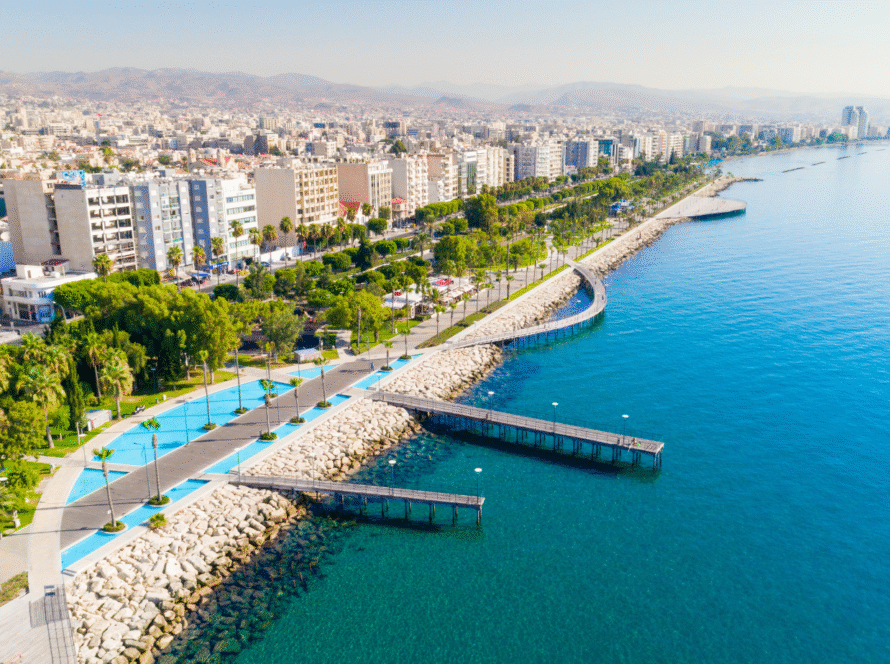
The island’s business hub features a marina, casinos, and high-end residential towers. Property prices average around €4,000 per square meter—notably higher than other areas. Limassol attracts professionals, investors, and buyers seeking urban amenities alongside Mediterranean living.
Best for: Professionals, investors targeting rental income, those wanting modern apartments with marina views.
Larnaca
More affordable than Paphos or Limassol, Larnaca offers excellent seafront apartments in Larnaca Bay, Oroklini, and Livadia. The market remains driven largely by local buyers, creating stable pricing without speculative pressure. Analysts rank it among the top places to buy property in Cyprus for 2026.
Best for: Budget-conscious buyers, young families, those wanting year-round living near Larnaca International Airport.
Ayia Napa & Protaras
East coast holiday hotspots with strong short-term rental demand during summer. Properties for sale here target investors seeking capital appreciation and seasonal rental income. Winters are quieter but peaceful.
Best for: Pure investors, holiday home owners comfortable with seasonal living patterns.
Nicosia
The inland capital suits professionals and long-term rental investors rather than holiday home seekers. Focus here is permanent residence and consistent tenant demand from government workers and university students.
Troodos Mountains & Villages
Cooler climate, traditional stone houses, and villages like Omodos, Platres, and Kakopetria offer niche opportunities. Many properties require renovation but provide authentic Cypriot charm.
Best for: Buyers seeking countryside retreats, renovation projects, or escape from coastal heat.
We help clients shortlist 2–3 locations matching their budget and lifestyle, rather than pushing a single resort or developer. Proximity to airports, healthcare facilities, and international schools factor into every recommendation.
Types of Property in Cyprus to Buy
Cyprus offers both resale property and new-build options spanning modest studio apartments to luxury sea-view villas and traditional village stone houses.
Property Categories
City and resort apartments (studios, 1–3 beds) concentrate in Paphos, Limassol, Larnaca, and Ayia Napa. These suit retirees, couples, and investors wanting manageable properties with communal amenities.
Townhouses and maisonettes in complexes with shared pools appear particularly in Paphos (Kato Paphos, Universal, Tombs of the Kings area). These offer a middle ground between apartments and detached villas.
Detached villas with private pools in Peyia, Coral Bay, Kapparis, Protaras, and the hills around Limassol represent the premium segment. Prices range from €130,000 at entry level to several million for luxury properties.
Traditional village houses in the Troodos foothills and wine villages appeal to buyers seeking renovation projects and authentic experiences.
Off-plan and new developments include energy-efficient A-rated homes with photovoltaic panels and modern insulation, attracting environmentally conscious purchasers.

New-Build vs Resale Comparison
Factor | New-Build | Resale Property |
|---|---|---|
Maintenance | Lower initially | May require updates |
Energy efficiency | Superior (A-rated) | Varies significantly |
Payment structure | Staged payments available | Full payment at completion |
Price per m² | Higher | More negotiation room |
Neighborhood | Unproven | Established viability |
Due diligence | Simpler | Thorough survey essential |
We pre-negotiate cash-back style incentives with developers—partial refunds on furniture packages, legal fee contributions, or cash rebates on completion—which walk-in buyers typically cannot access.
Legal Framework & Title Deeds in the Republic of Cyprus
The Republic of Cyprus operates a legal system heavily influenced by British law, featuring a central land registry and strong title deed protection when processes are followed correctly. This framework gives buyers from many countries confidence in their property purchase.
Understanding Title Deeds
Title deeds represent definitive proof of ownership registered at the District Land Office (Paphos, Limassol, Larnaca, Famagusta, or Nicosia). The buyer’s name must ultimately appear on the title deed for full legal ownership.
Problems arise when purchasing immovable property without issued deeds:
Developers may retain mortgages against the property
Delays in deed issuance can extend indefinitely
Resale becomes complicated when title documentation is incomplete
Essential Legal Checks
Every purchase should include:
Independent legal advice from an English-speaking lawyer acting only for the buyer—never for both buyer and developer
Land Search Certificate from the Land Registry confirming existing mortgages or charges
Verification that planning permission and building permits were properly issued
Confirmation the property was built according to approved plans
The Specific Performance Law (2011) gives registered sale contracts precedence over subsequent mortgages. However, checking for pre-existing encumbrances remains essential—this law protects against future mortgages, not existing ones.
Warning: Northern Cyprus
Buying in northern cyprus carries significant legal and ethical risk. Greek Cypriots who were people displaced during the 1974 conflict remain legal owners under Republic of Cyprus law. The European Court of Human Rights has ruled in favor of original owners in successful case decisions. Authorities cannot enforce judgments or enforce rulings in the north, leaving purchasers vulnerable.
We strongly recommend consulting the UK Foreign Office guidance before considering any northern property. We only introduce clients to properties in the internationally recognized Republic where we work with lawyers who prioritize clean title and full due diligence.
Ownership Rules for EU and Non-EU Buyers
EU citizens can generally purchase multiple properties without strict limits, benefiting from freedom of movement principles.
Non cypriot buyers from outside the EU face restrictions—typically limited to one residential property (house or apartment) or small land plot, subject to Council of Ministers’ approval.
Council of Ministers Approval Process:
Application submitted after signing the contract of sale
Required documentation: passport copies, background information, property details
Processing: several months on average
Occupation normally allowed while approval is pending
Most standard applications for genuine home use are approved. The requirement cannot be ignored—it’s a legal necessity for final completion. We guide clients and their lawyers on assembling correct documentation, reducing delays.
Step-by-Step Process to Buy Property in Cyprus
A typical freehold property purchase runs 8–16 weeks from offer acceptance to completion, depending on whether existing title deeds are issued and whether non-EU approval is required.
The Whole Process
Month 0–1: Initial consultation and search
Begin with budget establishment, including mortgage pre-approval if needed from Cypriot banks. Shortlist 2–3 locations matching your requirements. Arrange an inspection trip or virtual viewings to assess properties and neighborhoods.
Month 1–2: Offer and reservation
Make an offer specifying price, inclusions (furniture, appliances), and timings. Upon acceptance, pay a small reservation deposit (typically 1–3% of purchase price) to secure the property while legal checks proceed.
Month 2–3: Due diligence and contract
Your independent lawyer conducts due diligence—title searches, planning verification, checking for charges against the land. Once cleared, sign the Contract of Sale and pay the first major instalment (typically 25–35%). The contract is stamped and lodged at the Land Registry for Specific Performance protection.
Month 3–4: Approvals and completion
Non-EU buyers apply for Council of Ministers permission. Where relevant, permanent residency applications through property investment schemes proceed in parallel. Complete remaining payments, obtain keys, and arrange utility transfers.
Post-completion
Title deed transfer occurs when deeds are available—typically 6–12 months for new properties. Your name becomes registered with authorities as the legal owner.
Our relocation management team coordinates much of this remotely: lawyer communications, surveys, banking, utility transfers, and school visits. This proves especially helpful for buyers not residing in Cyprus during the buying process.
Financing Your Cyprus Property Purchase
Buyers typically use a combination of funding sources:
Cash from savings or equity release from home country property
Euro mortgages from Cypriot banks (up to 70–75% loan-to-value for eligible foreign buyers)
Developer payment plans for new-builds with staged payments linked to construction milestones
Typical lending conditions (2025–2026):
Requirement | Standard Terms |
|---|---|
Documentation | 3–6 months bank statements, proof of income |
Maximum LTV | 70–75% for foreign buyers |
Loan term | Up to 25–30 years (age limits apply) |
Interest rates | Variable, tracking Eurozone rates |
Budget approximately 8–10% of purchase price for acquisition costs including legal fees, stamp duty, property transfer fees, and VAT where applicable. We can introduce clients to local banks and independent mortgage brokers, though we don’t provide financial advice ourselves.
Taxes, Fees & Ongoing Ownership Costs
Cyprus remains a relatively low-tax environment compared with many countries in Western Europe, but understanding both one-off and ongoing costs is essential.
One-Off Purchase Costs
Stamp duty on the Contract of Sale applies at escalating rates based on purchase price—lower percentages up to approximately €200,000–€300,000, with higher rates above these thresholds.
Property transfer fees payable to the Land Registry accompany title deed transfers. Reductions apply where VAT has been paid or for first-time transfers.
VAT at 19% applies to new-builds, though a reduced 5% rate may apply to the first 200m² of a primary residence meeting specific criteria.
Ongoing Annual Costs
Cost Category | Typical Amount |
|---|---|
Municipality/refuse taxes | €200–€500 per year |
Communal charges (complexes) | €1,000–€3,000+ per year |
Electricity (year-round use) | €150–€300 per month |
Water | €30–€50 per month |
Internet | €30–€50 per month |
Rental income is taxable both in Cyprus and potentially in your home country, typically governed by double-taxation treaties. State-level immovable property tax was abolished, though municipal charges continue.
Foreign residents often benefit from attractive treatment of pension and investment income under treaties with member states like the UK. We advise seeking personalised tax guidance reflecting your circumstances.
Duty-Free Privileges and Moving Personal Belongings
People relocating permanently may qualify for duty-free import of personal effects and vehicles, subject to current customs rules. Entitlements differ for EU vs non-EU arrivals and have evolved since Cyprus joined the EU.
Check latest Cyprus Customs Department guidelines before shipping goods—thresholds and documentation requirements change periodically. Our relocation management team coordinates with international removal companies and customs brokers so clients benefit fully from duty-free entitlements.
Residency, Lifestyle & Practical Considerations
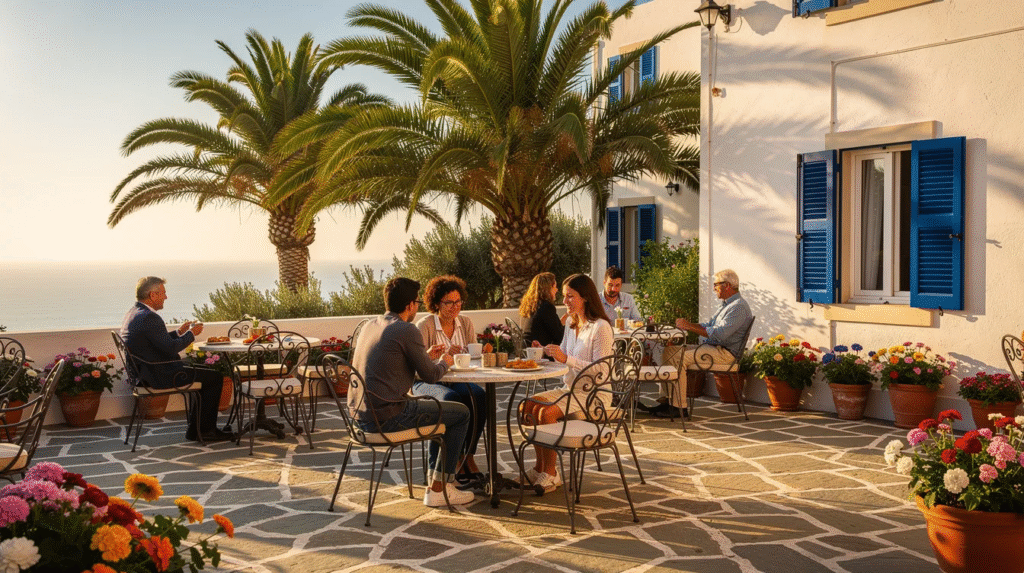
Daily life in Cyprus emphasizes relaxed Mediterranean pace, café culture, seafront promenades, and strong expat communities. English is widely spoken in Paphos, Limassol, Larnaca, and tourist areas.
Residency Routes
Temporary residence permits (Pink Slip) allow non-EU nationals to reside when demonstrating sufficient funds and accommodation. These typically require proof of monthly income (€1,500–€2,000 minimum).
Permanent residence through property investment requires purchases exceeding specified thresholds (e.g. €300,000+) combined with minimum income requirements. Scheme details evolve—verify current rules at purchase time.
Practical Considerations
Healthcare: The GESY public system provides universal coverage for registered residents. Private clinics offer alternatives. Major towns feature English-speaking doctors.
Education: English-language and international schools operate in Paphos, Limassol, Nicosia, and Larnaca with fees ranging €3,000–€8,000+ annually.
Banking: Euro accounts with modern online banking. Opening accounts requires passport and proof of address. Card payments dominate urban areas.
Safety: Cyprus maintains low crime rates compared with many EU states. Normal precautions and adequate home insurance remain prudent.
We help newcomers register with GESY, recommend international schools, set up utility accounts, and arrange amenity viewings as part of our free relocation management support.
Common Risks & How to Avoid Them
Typical pitfalls to avoid:
Purchasing without independent legal representation
Ignoring title deed status and developer mortgages on risk property
Overlooking communal fees or special assessments for older complexes
Underestimating renovation costs for village houses where risk property owned status is unclear
Risk reduction steps:
Insist all payments flow through traceable banking channels aligned with contract milestones
Commission structural surveys for older or rural properties
Cross-check rental income promises against realistic seasonal occupancy
Verify agents and developers through independent sources
Consult guidance from authorities like the UK Foreign Office for warnings about property scams. By working only with established partners and negotiating financial incentives for buyers rather than taking inventory from any developer, we reduce conflicts of interest and improve buyer protection.
How We Add Value When You Buy Property in Cyprus
We act as a buyer-focused intermediary, matching clients with vetted agents, developers, and lawyers throughout Cyprus. Our priority is legal safety—clear title, correct permits—over quick commissions.
Our Two Key Value Additions
Cash incentives at completion
Through our partner network, we negotiate direct monetary benefits unavailable to walk-in buyers. These may include:
Cash-back payments on completion (typically €5,000–€15,000+ depending on purchase price)
Contributions toward legal fees
Furniture package participation
Value upgrades (enhanced finishes, parking, appliances)
Free relocation management
Our professional service covers the entire transition:
Airport collection for inspection trips
Temporary accommodation arrangement
School and neighborhood orientation
Utility connection support
Coordination with international movers and customs brokers
Healthcare registration assistance
We maintain long-term relationships after purchase, helping locate reputable property managers, tradespeople, and local tax advisers.
Ready to Find Your Ideal Property?
Request a personalised shortlist of latest properties in Paphos, Limassol, Larnaca, or Ayia Napa matching your budget. For further information about what cash incentive and relocation package you qualify for, contact our team today. Whether you’re seeking a holiday home, permanent residence, or investment property, we’ll guide you through every step with independent advice and genuine buyer protection.


1 Comment
Comments are closed.