


Moving abroad is one of life’s biggest decisions, and choosing the right destination makes all the difference. For a growing number of UK, EU, and international relocators, Paphos on Cyprus’s southwest coast has become a popular destination that delivers on every front.
Why Relocating to Paphos Is So Popular in 2026
Paphos draws serious interest from those seeking a new life thanks to its sunny climate featuring over 300 days of sunshine annually, consistently high safety rankings among EU countries, and affordability that outpaces both northern European cities and even Limassol. The vibrant expat community here makes the cultural transition remarkably smooth.
The municipality hosts around 35,000 residents, while the wider district encompasses over 90,000 people. This creates a small-city feel with comprehensive amenities—international schools, hospitals, shopping centres like Kings Avenue Mall, and cultural sites—all within a compact area.
As an EU member state since 2004 using the euro since 2008, Cyprus offers legal stability and straightforward banking access through major institutions like Bank of Cyprus and Hellenic Bank.
CyprusMove.com is a local relocation management company based right by Paphos Harbour, specialising in taking the stress out of relocating to Paphos. We provide the expertise you need to relocate and save you time, effort and money in the process by handling paperwork, logistics, and local setups.
This guide covers:
Visas and registration pathways for EU and non-EU citizens
Prime neighbourhoods varying by vibe and budget
Living costs with 2025-2026 rental and expense ranges
Practical setup steps for your first weeks
How CyprusMove manages the end-to-end process
The Climate & Everyday Lifestyle in Paphos
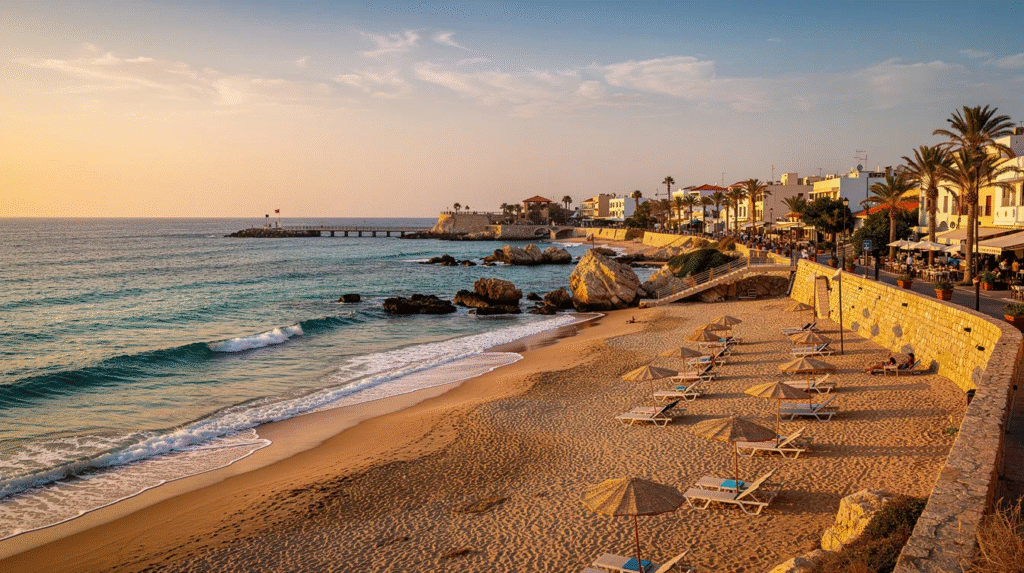
Paphos enjoys a warm mediterranean climate that shapes every aspect of daily life. With mild winters averaging 16-18°C in January and long dry summers peaking at 30-34°C in July-August, outdoor living becomes second nature. Sea temperatures stay above 20°C from roughly May through November, enabling extended swimming seasons.
This weather facilitates evening alfresco dining at the bustling harbour, year-round coastal promenades from Paphos Castle to Lighthouse Beach, and winter hikes in the nearby Akamas Peninsula. Day trips to the cooler Troodos Mountains offer relief from peak summer heat.
Compared with the frenetic pace of London, Manchester, or Berlin, Paphos embodies a relaxed pace with quiet early afternoons followed by lively evenings at seaside cafés and traditional tavernas. The district boasts over 25 beaches including Coral Bay with turquoise waters, Vrysoudia for family picnics, and the marina for boat excursions.
A typical day might involve a morning school run, remote work from a harbour café, an afternoon siesta, and sunset views at the dramatic Sea Caves near Peyia. The slower pace and clean air offer a lifestyle that contrasts sharply with urban European counterparts.
Expat Community, Language & Safety
Paphos features a well-established expat scene dominated by british expats, German, Scandinavian, and Russian-speaking communities. This welcoming community makes initial settling markedly easier through shared cultural touchpoints and organised social networks.
Approximately 40,000 British nationals reside across Cyprus, with a substantial concentration in Paphos and adjacent villages like Peyia, Chloraka, and Tala. British pubs in Kato Paphos broadcast Premier League matches, while active Facebook and Meetup groups facilitate hiking clubs, parenting meetups, digital nomads gatherings, and events for british retirees.
English speakers find daily life manageable without Greek fluency—shops, cafés, real estate agencies, clinics, and public services operate comfortably in English. Learning basic phrases like “kalimera” enhances deeper integration with local Greek Cypriots.
Cyprus consistently ranks among Europe’s safest nations with low violent crime rates, creating a safe environment where children play outdoors late into summer evenings. Pet owners appreciate clear EU/UK pet import protocols, abundant veterinary clinics, dog-welcoming cafés, and designated dog beaches near Acheleia.
Cost of Living & Housing in Paphos (2026)
Living costs in Paphos remain notably lower than major cities like London and more affordable than Limassol, offering strong value for newcomers. The cost of living here allows for a comfortable lifestyle without excessive spending.
Current rental ranges include:
One-bedroom apartments in Kato Paphos or Universal: €700-€1,200/month
Two-bedrooms in pool-equipped complexes: €900-€1,800/month
Three-bedroom villas with a private pool (older style houses): €2000-€3,500/month
Three-bedroom villas with a private pool (new style houses): €3500-€5,500/month
Four-bedroom villas with a private pool (older style houses): €3000-€5,500/month
Four-bedroom villas with a private pool (new style houses): €4500-€6,500/month
Five-bedroom plus villas with a private pool (old and new style houses): €5000-€8,500/month
A couple’s monthly budget typically includes groceries at €350-€450, utilities at €150-€220 depending on AC usage, car costs at €150-€250, and eating out several times weekly at €200-€350.
Rents often sit 40-60% below Greater London equivalents for comparable property. Seasonal peaks of 10-20% higher occur in tourist hotspots like Kato Paphos from June to September.
Property prices for purchases range from seafront apartments near Tombs of the Kings Road at €3,200-€5,500/m² to pool villas in Tala and Peyia at €2,000-€3,500/m², with more affordable townhouses in Universal and Anavargos at €1,450-€2,300/m². The investment potential remains strong with rental yields of 4-8%.
Best Areas & Neighbourhoods to Live in Paphos
Though compact, Paphos neighbourhoods diverge significantly in atmosphere, pricing, and sea proximity. Each area offers different types of living experiences.
Kato Paphos & Tombs of the Kings offers walkable access to the harbour, beaches like Lighthouse, and nightlife along Poseidonos Avenue. Apartments in tourist-oriented complexes suit those prioritising coastal vibrancy near the city center.
Paphos Old Town (Ktima) is the restored historic core around Kennedy Square with local cafés, art galleries, and weekly markets. It delivers an authentic Greek Cypriot-expat mix suitable for year-round living.
Universal Area near the American University of Beirut-Mediterraneo campus features modern apartment blocks popular among expats and permanent residency applicants, with reliable bus links to the harbour, Old Town, and Paphos General Hospital.
Hill Villages including Konia, Anavargos, Mesa Chorio, and Empa provide summer-cooling elevations, spacious villas, proximity to international schools, and quick highway access to Limassol.
Coastal Villages like Chloraka, Peyia, and Coral Bay blend sea views and beachfront living, appealing to families and retirees seeking space near landmarks like the Sea Caves.
Visas, Residency & Local Registration
Visa and residency requirements differ sharply between EU citizens and non-EU nationals including post-Brexit UK passport holders. Rules change periodically, so always verify current requirements via official Cyprus Migration Department sources.
For EU/EEA/Swiss citizens: Those staying over three months must register for the Yellow Slip (Registration Certificate) at the Paphos District Administration Office on Neophytou Nicolaides Avenue. Processing typically takes 2-4 weeks with complete documents.
For non-EU citizens: Common paths include Permanent Residency via €300,000+ property investment qualifying for fast-track approval, Category F for retirees proving €10,000+ annual passive income, or work permit routes tied to job offers. Processing times extend to 2-6 months.
Essential documents universally include valid passport, rental or purchase contracts, income/savings proof, comprehensive health insurance, and passport photos—varying precisely by category.
CyprusMove.com coordinates the full process: pre-move planning, form preparation, booking appointments, and accompanying clients to the Migration Department on Ellados Avenue and Social Insurance office on Griva Digeni Avenue.
Key Authorities & Practical Set‑Up in Paphos
Upon arrival, prioritise administrative steps within the first 2-4 weeks to establish legal and practical footing.
Paphos District Administration Office (Neophytou Nicolaides Avenue, 8100 Paphos) handles Yellow Slips and local registrations. Book early-morning slots to avoid queues, presenting passport, address proof, and photos.
Migration Department (Ellados Avenue 83, 8020 Paphos) processes residence permits and immigration extensions, typically requiring pre-scheduled appointments.
Social Insurance Services (Griva Digeni Avenue 85) issues Social Insurance Numbers essential for work, contributions, and pension transfers.
Opening bank accounts at Bank of Cyprus or Hellenic Bank branches demands passport, address proof, and income evidence. Healthcare registration under GESY follows residency approval, with private insurance bridging gaps. Key facilities include Paphos General Hospital and IASIS Private Hospital.
CyprusMove streamlines this by attending appointments, preparing documentation, and leveraging local connections to expedite setups.
Education, Work & Remote‑Friendly Infrastructure
Paphos accommodates families, remote professionals, and local job seekers effectively within its tourism-driven economy.
For families with children: International schools like the International School of Paphos in Anavargos and Aspire Private British School in Tremithousa offer British curriculum education with private schooling fees ranging €5,000-€12,000/year. Public Greek-language schools provide free immersion for deeper integration.
Job opportunities centre on tourism and hospitality along Poseidonos Avenue hotels (seasonal peaks May-October), real estate, construction, education, and healthcare services. Average salaries run €1,500-€2,500/month.
Remote work thrives via widespread fibre internet up to 200 Mbps, comprehensive 5G coverage, coworking at Regus Paphos, and laptop-friendly cafés throughout Old Town and Kato Paphos. Digital nomads appreciate the Category D permit option requiring €3,500/month income proof.
Daily Life: Shopping, Transport & Healthcare Access
Everyday life in Paphos revolves around car use for its spread-out layout, yet remains manageable with services within 10-20 minute drives.
Key supermarkets include Sklavenitis hypermarkets, AlphaMega near the highway for premium imports, and Lidl in Kato Paphos for budget staples. Old Town’s weekly markets offer fresh produce, while local butchers and bakeries provide fresh halloumi and souvlaki ingredients for exploring cypriot culture.
Transport features left-hand driving with well-maintained roads to Limassol (45 minutes) and Nicosia (1.5 hours). The Paphos bus network links harbour station to Old Town and villages, though services are limited after 10pm. Road signs appear in both Greek and English. UK licences remain valid for six months before exchange.
Healthcare access includes Paphos General Hospital for GESY-covered public care and private options like IASIS and Evangelismos for faster specialist access.
First-week checklist: Acquire a local SIM from Cyta/MTN, register with a GESY GP, install fibre internet, map bus routes, and identify your nearest supermarket and pharmacy.
Lifestyle, Leisure & Things To Do Around Paphos
As a unesco world heritage site blended with modern resort vibes, Paphos offers an enriching mix of ancient history, beaches, and nature escapades on the island.
Iconic sites include the Paphos Archaeological Park’s Roman mosaics, the underground Tombs of the Kings, Paphos Castle hosting medieval festivals, and Aphrodite’s Rock en route to Limassol. Unlike Ayia Napa’s party scene, Paphos offers cultured exploration.
Beaches span Coral Bay for watersports, Vrysoudia for calm swims, and sunset vantage points at Sea Caves. Boat trips to the Blue Lagoon from Latchi cost €30-50/person.
Leisure extends to golf courses like Minthis Hills and Secret Valley (green fees €50-100), wine routes through Kathikas and Stroumbi villages showcasing indigenous varieties, and hiking in Akamas Peninsula’s Avakas Gorge.
The food scene features traditional tavernas with meze at €15-25/person, modern cafés with coffee at €3-4, and restaurants around the harbour—painting vivid weekend tableaux across this corner of Europe.

How CyprusMove.com Makes Relocating to Paphos Stress‑Free
CyprusMove.com operates as a Paphos Harbour-based relocation management company with profound familiarity of local authorities, neighbourhoods, and providers.
Our services span:
Pre-move planning with customised checklists
- Fact-find tours of the local areas
Property searches via vetted agents for rent or purchase
Shipping coordination and school placements
Post-arrival orientations including utility setups
We specialise in navigating paperwork—scheduling Yellow Slip and residency appointments, document preparation, and accompanying clients to District Administration and Migration Department offices. Cyprus moving becomes straightforward with local expertise.
Real examples: We assisted a UK family in autumn 2025 to secure International School of Paphos spots and a Konia rental before arrival. We also guided a German remote worker through Universal property PR acquisition in weeks.
Contact CyprusMove.com for a free consultation online or at our harbour office to tailor your timeline.
Planning Your Move: Timeline & Next Steps
6-12 months before: Research visas, budget via bazaraki.com rentals, and make an exploratory Paphos visit to different areas.
3-6 months before: Secure school places, initiate residency applications, scout property, and select your neighbourhood.
Final 1-3 months: Finalise house rentals or purchases, ship belongings, arrange pet travel with microchip and vaccines, and set up insurance and banking.
Prepare by cancelling home country contracts, redirecting tax and pensions, and gathering documents with certified Greek translations.
Common concerns addressed:
Is Paphos right for families? Absolutely—quality schools, beaches, and safety make it ideal for children.
Can I live here on my pension? Category F supports retirees with €10,000+/year income, and many benefits extend to qualifying residents.
Do I need Greek? English proficiency throughout Paphos means it’s unnecessary for daily life.
How fast can I relocate? Realistically 3-6 months with proper planning.
Relocating to Paphos in 2026 is highly achievable. This great place offers affordable living, a quality lifestyle, and access to everything Europe has to offer. Your next chapter begins with the right local guidance—contact CyprusMove.com today to start your personalised relocation plan and settle into your new Mediterranean life.



2 Comments
Comments are closed.